Picture Hanging System Types
A well-chosen picture hanging system will likely outlive furniture, wall colors, even renovations. That’s why rail selection deserves more than a quick pick. The right system gives you tool-free adjustability, damage-free walls, and the ability to reconfigure art, signage, and panels in minutes. Below, I’ll walk you through the four primary picture hanging system types Wall, Ceiling, Built-In, and Tensioned with strengths, limitations, and best-fit use cases so you can spec with confidence.
The four Picture Hanging System Types:
1. Wall Systems
2. Ceiling Systems
3. Built-in Systems
4. Tensioned Systems


 Wall Systems:
What they are: Surface-mounted rails installed directly to finished walls.
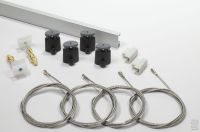
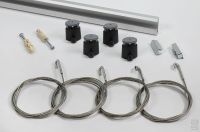
Cables (clear nylon or stainless) or rigid rods drop anywhere along the rail, adjustable hooks support the artwork.
Why choose them:
- Fastest retrofit on painted drywall, masonry, tile, or wood panels.
- Ultra-flexible, slide droppers left/right, and micro-adjust height without tools.
- Finish options from discreet closed-face tracks to open-face profiles that communicate strength and a modern, gallery tech look.
Best uses: Homes and galleries, corporate corridors, lobbies, libraries, and any space where frequent change-outs are expected.
Pro picks within Wall Systems (examples):
- Click Rail Track (closed face, can hide below molding for a minimalist line).
- Classic Wall Track (open face, high capacity, works with cables or rods).
- Contempo® Track (open face and bendable to follow curved walls).
Tip: Mount rails level across long runs even if the floor isn’t. That continuous datum keeps salon walls clean and professional.
 Ceiling Systems:
What they are: Rails that fasten to the ceiling or bulkhead instead of the wall. Droppers fall in front of the wall surface.
Cables (clear nylon or stainless) or rigid rods drop anywhere along the rail, adjustable hooks support the artwork.
Why choose them:
- No penetrations in specialty wall finishes (stone, glass, concrete, acoustic panels).
- Perfect over fireplaces or full-height tile where wall mounting is impractical.
- Great for multi-row hangs and tall spaces, start at the ceiling and compose freely.
Best uses: Museums, retail, education, hospitality, residential or any project with hard-to-drill walls or where designers prefer an unbroken wall plane.
Pro picks within Ceiling Systems (examples):
- Up Rail Track (rounded face detail that softens the transition and protects the wall edge).
- Classic Ceiling Track (open or closed face, cable or rod).
- Xpo Rail Track (purpose-built for signage).
- Articulated or Fixed Piers (when a point-load attachment is preferred or for window displays/room dividers).
Tip: In settings with seismic or vibration concerns, consider rods over cables for zero stretch and pinpoint stability.
 Built-In Systems:
What they are: Rails integrated during construction or renovation, concealed within the wall/ceiling assembly for a seamless reveal or shadowline. You keep the clean architecture but gain full hanging capability.
Cables (clear nylon or stainless) or rigid rods (rods for Display Reveal only) drop anywhere along the rail, adjustable hooks support the artwork.
Why choose them:
- Invisible or near-invisible hardware line, designers get the minimalist aesthetic without losing functionality.
- Commercial-grade performance embedded in the structure, ideal for long-term programs.
Best uses: New builds or remodels in corporate, cultural, and multifamily projects, high-traffic interiors where cleanability and no wall damage are mandatory.
Pro picks within Built-In Systems (examples):
- Display Reveal (an architectural reveal profile engineered to also perform as a hanging track).
- Shadowline Ceiling Track (Ceiling install for gypsum assemblies).
- Shadowline Wall Track (Wall install for gypsum assemblies).
- Drop Ceiling Track (Replaces the usual L Molding used in recessed ceilings).
- Deco Rail Track (Completely invisible behind crown moldings).
Tip: Coordinate rail placement with casework heights and door headers so the reveal aligns with the project’s horizontal control lines
 Tensioned Systems:
What they are: Cables tensioned between two anchor lines wall-to-wall, ceiling-to-floor, or between piers, to hold panels, acrylic pockets, or framed art at precise heights.
Stainless steel cables or rigid rods create the tensioned system, adjustable hooks support the artwork.
Why choose them:
- Create grid-perfect donor walls, wayfinding, or multi-row photo arrays.
- Float displays independent of the wall substrate, great in glass lobbies and atriums.
- Add 3D objects or pockets for brochures and graphics.
Best uses: Real-estate windows, corporate story walls, universities, museums, retail campaigns.
Pro picks within Tensioned Systems (examples):
- Tensioned kits based on Click Rail, Classic Wall, Contempo®, and Classic Ceiling Tracks, or Articulated and Fixed Piers for point-mount anchoring.
Tip: Use two bottom stabilizers on oversized panels to prevent yaw and maintain a crisp plane.
Choosing by Requirement
(Quick Guide)
- Historic or premium finishes?
Use Ceiling or Built-In systems to avoid wall perforations. Picture-rail style hanging preserves finishes and allows damage-free reconfiguration. One reason designers specify rail systems for galleries and heritage interiors. - Rental or high-turnover spaces?
Wall systems deliver the fastest install and most affordable retrofits, rail + cable beats patch + paint cycles every time. A picture rail kit approach is widely recommended for flexible, no-damage décor. - Tall volumes or glass walls?
Ceiling or Tensioned systems let you hang in space, not from the wall, common in real-estate and retail displays. - Ever-changing exhibits or grids? Tensioned systems provide perfect vertical alignment and repeatable spacing across large arrays.
Practical Design Rules
(that never go out of style)
- Eye-level baseline:
Start your layouts with the artwork center at 57–60 inches above finished floor. It’s the museum standard used by designers to keep walls visually coherent, adjust for furniture or extra tall ceilings. - Two points for wide frames:
Use two droppers for pieces wider than 24–30 inches to curb sway and keep the horizon true. - Cable vs. rod:
Cables disappear, rods are rigid and excel where zero stretch or security attachments are required. Many galleries favor rods for heavy or high-value works. - Plan for change:
Rail systems are designed for rapid re-hang without touching the wall, no patching, sanding, or repainting. That’s the core advantage over hooks and nails, echoed across industry guides.
FAQs
(drawn from common questions we hear and what’s asked online)
- Do cables damage the wall?
No, the rail bears the load, and droppers hang free of the wall surface. That’s why rails are favored in rentals and museums. - Will cables stretch or creep?
Quality stainless cables have negligible stretch under rated loads, for absolute rigidity (or anti-theft fittings), choose rods. - How much weight can a system take?
Capacity depends on the rail and dropper combination. Check the product spec for the rated load and use two droppers for wide/heavy frames to share the load safely. - Can I hang panels without drilling them?
Yes. Use Panel Hooks to “sandwich” foam board or acrylic, no fasteners in the substrate, fast swaps for signage and exhibits (see our Utility & Panel Hooks guide).
Why AS Hanging Display Systems
Unlike one-off hooks and nails, our systems are an ecosystem, tracks, cables/rods, adjustable hooks, and specialty fittings that work together across every wall condition. You get clean lines, real capacity, and true flexibility that protects both your walls and your schedule.
Explore:
- Wall Systems
Classic, Click, and Contempo® rails (plus architectural Piers) - Ceiling Systems
Classic Ceiling, Up Rail, and Xpo rails (plus Piers) - Built-In Systems
Display Reveal, Shadowline tracks, Drop Ceiling and Deco Rail - Tensioned Systems
Track-based or Pier-based kits for grids, windows, and multi-row arrays
If you have questions, or wish to learn more on how you can improve your next design project, please contact our Customer Support at [email protected], or give us a call at 866 935-6949 (toll free) or at our local number 450 619-7999.
When you hang with AS Hanging Display Systems, you Hang with the Best®.
Explore our Picture Hanging Systems built of tracks, cables and hooks.
We offer picture hanging hardware for your residential, commercial and institutional projects.